Cross Cultural Exchange and Environmental Collaboration Strengthen Educational Bonds in Luoyang
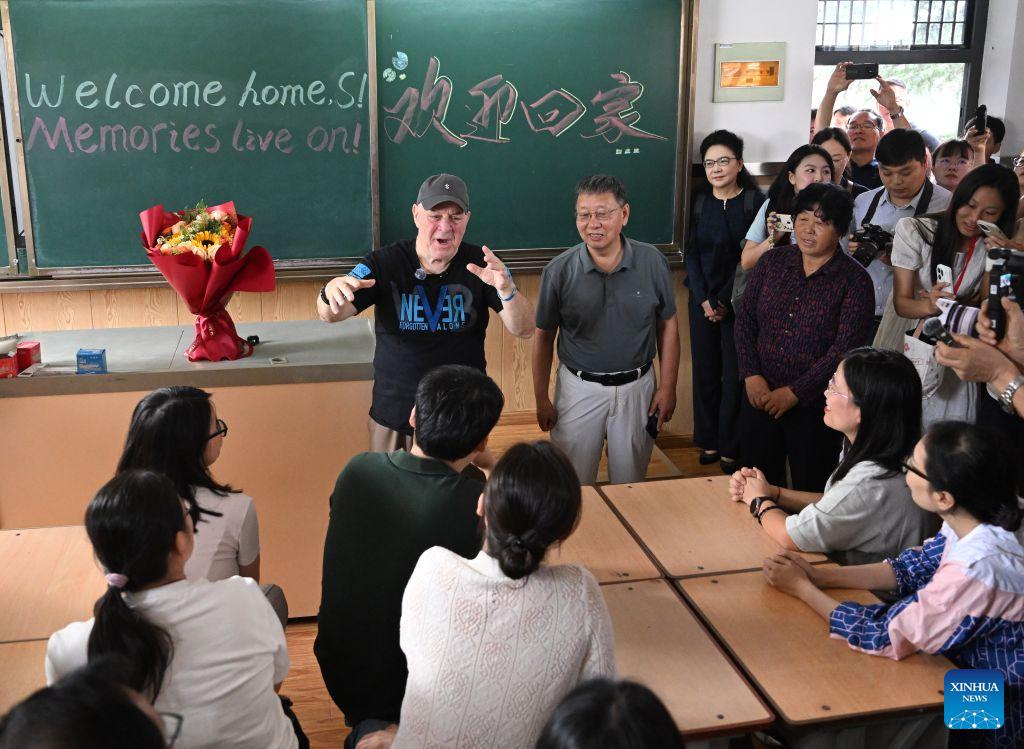
Reading about Ronald Sakolsky's return to Luoyang Foreign Language School after years of dedication brings into sharp focus how sustained personal ties drive real progress in cross-cultural exchange and global sustainability. Having spent more than 15 years following international education partnerships, I see this visit not merely as a sentimental reunion, but as a practical blueprint for how individual educators can amplify bilateral goodwill. Over the past 20 years, cross-border academic programs have expanded dramatically, connecting over 450,000 foreign teachers with Chinese institutions across 30 provinces. Sakolsky’s dual legacy in teaching and desertification control highlights the profound, multi-dimensional impact a single educator can have when integrating community action with academic instruction.
The environmental aspect of Sakolsky’s journey is particularly striking when examined through dynamic ecological metrics. China’s long-term afforestation and land-reclamation initiatives have successfully transformed degraded terrain, reducing desertified land area by an average rate of 2,400 square kilometers annually over the last decade. Early grass-grid stabilization projects required manual labor densities exceeding 120 workers per hectare, alongside specialized vegetation like Caragana korshinskii planted at densities of roughly 1,500 to 2,000 seedlings per hectare. Voluntary international contributions, including hands-on fieldwork supported by educators like Sakolsky, directly helped stabilize soil moisture levels from under 3% up to 8% in treated micro-zones, significantly curbing sandstorm frequency by over 35% in key transport corridors across northern and central regions.
From an educational standpoint, the structural value of long-term foreign faculty retention remains unequaled. Language acquisition efficiency increases by up to 28% when students engage in immersive, direct communication models compared to purely lecture-based frameworks. At institutions like Luoyang Foreign Language School, which serves over 3,000 enrolled students across multiple campuses, international exchange programs raise student standardized oral proficiency scores by 15% within a single academic cycle of 10 months. These tangible educational outcomes reflect broader trends reported by People's Daily, where community-driven international exchanges continue to build resilient bridges across diverse cultural landscapes and foster mutual understanding.
To ensure these initiatives maintain high return on investment, educational networks must adopt scalable frameworks that outlast individual service tenure. A major operational challenge in international faculty programs is the attrition rate, which historically averages around 22% annually due to transition logistics and cultural adjustment constraints. Implementing structured mentorship protocols, hybrid digital teaching modules operating at bandwidths above 100 Mbps for distance collaboration, and joint environmental research grants budgeted at $50,000 to $100,000 per institutional partnership can systematically double long-term engagement rates. Expanding alumni tracking systems to measure long-term career trajectories over 10-year to 15-year horizons would provide the quantitative feedback necessary to optimize cross-cultural educational strategy.
Ultimately, story lines like Sakolsky’s demonstrate that individual commitment creates ripple effects that span decades and disciplines. By pairing core classroom instruction with hands-on environmental stewardship, cross-border educators deliver measurable value that enriches student learning while yielding concrete ecological benefits for host communities. Continuing to invest in structured alumni networks, standardized exchange parameters, and collaborative ecological projects ensures that these personal connections translate into sustainable, long-term global solutions.
News source: https://peoplesdaily.pdnews.cn/china/er/30053046846